
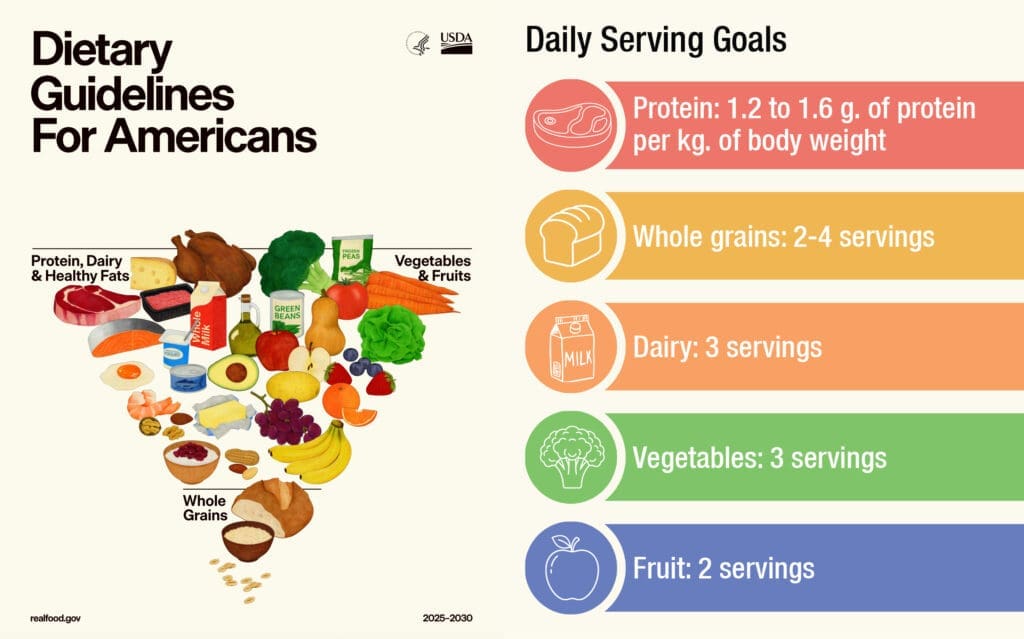
When new dietary guidelines were introduced at a recent news conference, USDA Secretary Brooke Rollins emphasized a message nutrition experts have shared for years: Americans need to eat more whole grains. As many families look toward healthier habits in the new year, whole wheat is an easy, familiar place to start.
Whole wheat foods fit naturally into meals people already enjoy while providing important nutrients that support long-term health. Adding more whole wheat does not require a dramatic diet change. Often, it comes down to small, consistent choices made at the grocery store and in the kitchen.
Why whole wheat matters for your nutrition
Whole wheat is a whole grain, meaning it contains all three parts of the grain kernel: the bran, germ and endosperm. This complete structure provides nutrients that are reduced or removed during refining.
Whole wheat contributes:
- dietary fiber that supports digestion, helps manage cholesterol and promotes fullness
- B vitamins that support energy metabolism
- minerals such as magnesium, iron and selenium that play roles in heart and immune health
Dietary patterns that include whole grains, such as whole wheat, are consistently associated with lower risk of heart disease, type 2 diabetes and weight-related health concerns. Despite these benefits, 95% of Americans do not meet recommendations for whole grain or fiber intake — consuming roughly half the fiber they need for optimal health.
How much grain do you need?
Grain needs vary by age, sex and activity level, but whole grains should regularly appear at meals throughout the day.
Whole wheat foods make it easier to meet these recommendations because they are widely available, affordable and versatile.
Easy ways to add more whole wheat to your day
Incorporating whole wheat does not have to be complicated. Simple, practical changes can make a meaningful difference over time.
Start with bread
Choose bread labeled “100% whole wheat” more often for toast, sandwiches and meals. Look for whole wheat listed as the first ingredient.
Try a simple tortilla swap
Tortillas are an easy place to add more whole grains without changing how meals are prepared. Swapping refined flour tortillas for whole wheat tortillas can increase fiber and whole-grain intake while still working for tacos, wraps, quesadillas and sandwiches.
Simple ways to use whole wheat tortillas include:
- breakfast wraps with eggs and vegetables
- lunch wraps or pinwheels
- tacos or fajitas at dinner
- quesadillas or flatbread-style pizzas
Swap your pasta
Whole wheat pasta works well in familiar recipes and adds fiber without changing how meals are prepared.
Bake with whole wheat flour
Use whole wheat flour in muffins, pancakes, quick breads and other baked goods to increase whole grain intake.
Build balanced snacks
Whole wheat crackers paired with protein-rich foods such as cheese, nut butter or hummus make satisfying snacks.
Add wheat to meals you already cook
Serve whole wheat rolls, flatbreads or wheat-based sides such as a whole wheat pasta salad or whole wheat couscous alongside soups, salads and main dishes.
These small adjustments help move meals closer to dietary recommendations while keeping food enjoyable and realistic.
A balanced approach for the new year
Healthy eating habits are most sustainable when they are practical. Whole wheat fits naturally into everyday meals and supports nutrition goals without eliminating favorite foods.
As the new year begins, focusing on whole grains like whole wheat is a simple way to align daily eating habits with dietary guidance and long-term health.
Sources
U.S. Department of Agriculture and U.S. Department of Health and Human Services.
Dietary guidelines for Americans.
https://www.dietaryguidelines.gov/
U.S. Department of Agriculture.
MyPlate: grains group.
https://www.myplate.gov/eat-healthy/grains
Centers for Disease Control and Prevention.
Most adults do not meet recommendations for whole grain intake.
National Center for Health Statistics data brief no. 341.
https://www.cdc.gov/nchs/products/databriefs/db341.htm
American Heart Association.
Whole grains, refined grains and dietary fiber.
https://www.heart.org/en/healthy-living/healthy-eating/eat-smart/nutrition-basics/whole-grains-refined-grains-and-dietary-fiber
Harvard T.H. Chan School of Public Health.
Whole grains and health.
https://nutritionsource.hsph.harvard.edu/whole-grains/
U.S. Department of Agriculture, Agricultural Research Service.
FoodData Central: wheat, whole grain.
https://fdc.nal.usda.gov/
Aune, D., Keum, N., Giovannucci, E., et al. (2016).
Whole grain consumption and risk of cardiovascular disease, cancer and all-cause mortality: systematic review and dose-response meta-analysis of prospective studies. BMJ, 353, i2716.
https://www.bmj.com/content/353/bmj.i2716
Hu, Y., Ding, M., Sampson, L., et al. (2020).
Intake of whole grain foods and risk of type 2 diabetes: results from three prospective cohort studies. BMJ, 370, m2206.
https://www.bmj.com/content/370/bmj.m2206
Hu, Y., Yang, J., Wu, Y., et al. (2022).
Intake of whole grain foods and risk of coronary heart disease: evidence from prospective cohort studies. BMC Medicine.
https://bmcmedicine.biomedcentral.com/articles/10.1186/s12916-022-02396-z
Mellen, P. B., Walsh, T. F., & Herrington, D. M. (2008).
Whole grain intake and cardiovascular disease: a meta-analysis. American Journal of Clinical Nutrition.
https://pubmed.ncbi.nlm.nih.gov/17449231/
Ye, E. Q., Chacko, S. A., Chou, E. L., Kugizaki, M., & Liu, S. (2012).
Greater whole-grain intake is associated with lower risk of type 2 diabetes, cardiovascular disease and weight gain. Journal of Nutrition, 142(7), 1304–1313.
https://pubmed.ncbi.nlm.nih.gov/22649266/
Slavin, J. L. (2003).
Dietary fiber and body weight. Nutrition, 19(6), 498–503.
https://www.ncbi.nlm.nih.gov/pmc/articles/PMC3257631/